When planning a home renovation, flooring is one of the decisions that deserves careful attention. It covers a large portion of the interior and influences how every room looks, feels, and functions. The right flooring can make a space feel warmer, create a sense of continuity between rooms, and provide a durable surface that handles everyday activities. On the other hand, choosing a material based only on its appearance can lead to maintenance difficulties or comfort issues later.
Every home has different requirements. A busy family household may need surfaces that can withstand frequent foot traffic, spills, and furniture movement. Someone renovating a smaller property might prioritise materials that make rooms appear more spacious. In colder climates, underfoot comfort and heating efficiency may also influence the decision.
There is no universal flooring solution that works equally well in every room. The best approach is to consider the purpose of each space, the condition of the existing subfloor, the property’s interior style, and the amount of maintenance the household is prepared to undertake. Understanding how different materials perform can make the selection process easier and help homeowners create interiors that remain practical and attractive over time.
Start With the Purpose of Each Room
Before comparing flooring materials, consider how each room is used. A kitchen, for example, experiences different conditions from a bedroom. Food spills, moisture, dropped utensils, and frequent movement make durability and easy cleaning important in cooking areas. Bedrooms generally have fewer demands, allowing homeowners to prioritise appearance, softness, and warmth.
Living rooms and dining areas often need a balance between visual appeal and everyday practicality. These spaces may experience regular foot traffic, furniture movement, and gatherings, so the flooring should be able to handle consistent use without requiring constant attention.
Bathrooms and utility rooms need particular consideration because moisture is more likely to be present. Materials that absorb water or are sensitive to humidity may not be suitable unless they have been specifically designed for those conditions.
It is also useful to think about how different rooms connect. Using complementary flooring materials or consistent colours can help create a coordinated appearance throughout the property. This does not necessarily mean installing the same material everywhere. Instead, the aim should be to maintain a visual connection while selecting surfaces that meet the practical requirements of each space.
Natural Wood for Warm and Timeless Interiors
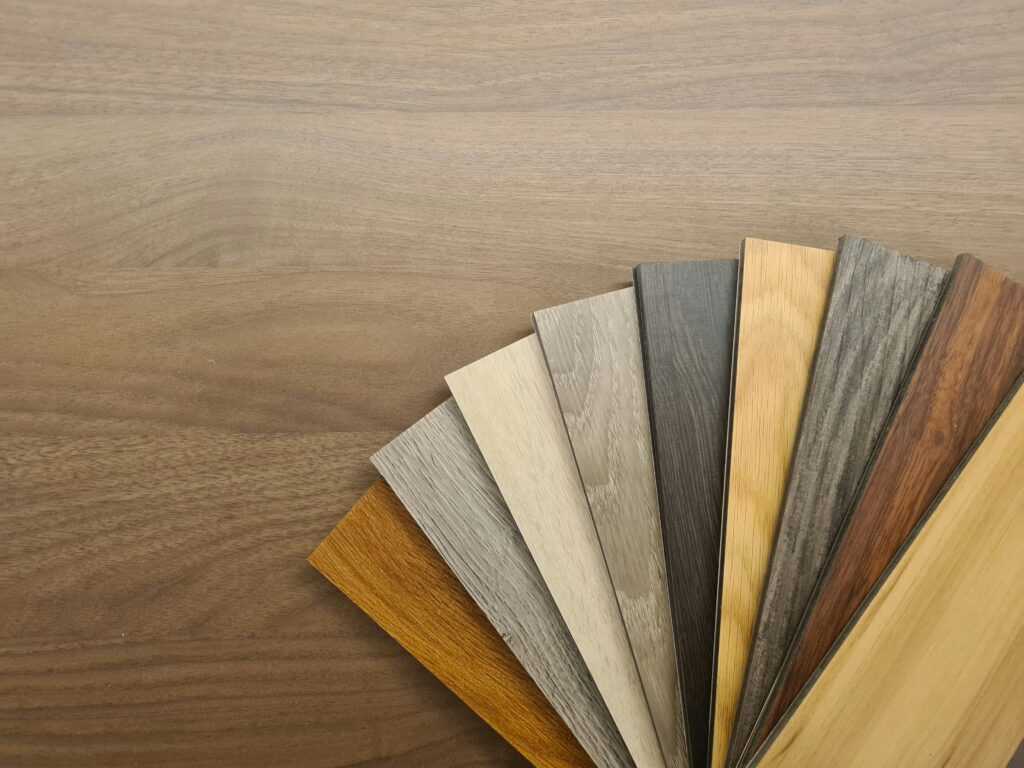
Wood flooring remains a popular choice because of its natural appearance and ability to complement different interior styles. Its grain patterns, textures, and variations in colour bring character to a room without requiring elaborate decorative features. Oak, walnut, maple, and hickory are common choices, each offering a different visual effect.
Solid hardwood is manufactured from individual pieces of timber and can often be sanded and refinished when its surface begins to show signs of wear. This gives it a long potential lifespan when properly maintained. Engineered wood offers another option, using a real wood surface layer supported by a multi-layer core. Its construction generally provides greater dimensional stability than solid wood when indoor conditions change.
Both options can work well in living rooms, dining areas, and bedrooms. However, homeowners should consider the amount of moisture and temperature variation in the intended space. Excessive moisture can damage wood, while significant changes in humidity may cause some products to expand or contract.
Maintenance is another factor. Regular sweeping, appropriate cleaning products, and protective pads beneath furniture can help preserve the surface. It is also important to follow the manufacturer’s recommendations for refinishing and care.
For households that appreciate natural materials and a classic interior appearance, wood flooring can be a worthwhile long-term investment. The choice between solid and engineered varieties should depend on the property’s conditions, budget, and installation requirements.
Tile and Stone for Areas That Need Durability
Ceramic, porcelain, and natural stone are practical choices for rooms where resistance to moisture and everyday wear is important. These materials are available in a wide range of finishes, sizes, colours, and patterns, making them suitable for both traditional and contemporary homes.
Porcelain tiles are particularly useful in kitchens, bathrooms, and entrance areas because of their dense construction and low water absorption. Ceramic tiles provide a broad selection of decorative options, while natural stone materials such as marble, slate, and granite offer distinctive patterns and textures.
Another advantage is their relatively straightforward maintenance. Most tile surfaces can be cleaned using suitable household products, although natural stone may require sealing to protect it from staining. Grout joints also need occasional attention to prevent dirt from accumulating.
One consideration is how these surfaces feel underfoot. Tile and stone can become uncomfortable in colder weather, especially in rooms where people spend extended periods standing or walking barefoot. Their hard surfaces may also feel less forgiving than wood, vinyl, or carpet.
This is one reason some homeowners consider radiant floor heating when planning a tiled floor. Because ceramic and porcelain generally transfer heat effectively, they can work well with compatible heating systems. Proper installation and suitable subfloor preparation remain important for achieving a stable and reliable floor.
Vinyl Flooring for Flexible Everyday Use
Vinyl flooring has developed considerably over the years. Modern products offer designs that imitate natural wood, stone, and other decorative surfaces, while providing practical features suited to everyday residential use.
Luxury vinyl plank and luxury vinyl tile are two common formats. Plank products generally replicate the appearance of timber, while tile formats are designed to resemble stone or ceramic. Depending on the product, vinyl flooring may have a rigid or flexible core, a decorative layer, and a protective wear surface.
One of its main attractions is the variety of available designs. Homeowners can achieve the appearance of more expensive materials while choosing a surface that is often easier to maintain. Many vinyl products also offer good moisture resistance, making them useful in kitchens, utility rooms, and other areas where occasional spills are likely.
However, product specifications should always be reviewed before purchase. Not every vinyl floor has the same wear resistance, waterproof properties, or suitability for underfloor heating. The type of core, thickness of the wear layer, and installation method can all affect performance.
Vinyl can be a practical option for households that want a balance between appearance, maintenance, and everyday comfort. Selecting a product that suits the room’s conditions is more important than choosing one based on its decorative finish alone.
Creating a More Comfortable Home With Radiant Heating
A comfortable home is not just about choosing attractive flooring. The temperature and feel of the surface underfoot can also influence how enjoyable a room is throughout the year. Underfloor heating offers a practical way to introduce consistent warmth, particularly in bedrooms, living areas, and other frequently used spaces. It distributes heat across the floor, helping create a pleasant indoor environment without relying entirely on conventional heating methods.
When paired with a compatible flooring material, radiant heating can make everyday living more comfortable while complementing the overall interior design. It can also provide more flexibility when arranging furniture because there is less dependence on conventional radiators occupying wall space.
Homeowners planning a renovation can explore different flooring and heating combinations before installation begins. Considering insulation, floor height, temperature controls, and material compatibility at this stage can help create a more efficient and comfortable living environment.
Laminate Flooring for Practical and Attractive Interiors
Laminate flooring is often considered by homeowners who want the appearance of timber without choosing solid hardwood. It uses a layered construction, typically combining a protective surface, a decorative image, a dense core, and a stabilising backing. This structure allows manufacturers to reproduce different wood grains, colours, and finishes while providing a surface designed for regular residential use.
Its versatility makes laminate suitable for several areas of a home, including bedrooms, living rooms, hallways, and home offices. Many products use click-lock installation systems, which connect individual planks and can make installation more straightforward. The protective surface also helps resist everyday scratches and scuffs, although the level of protection varies between products.
An additional consideration is how laminate flooring performs in homes with underfloor heating. Radiant systems provide warmth through the floor rather than relying entirely on heated air circulating around a room. This can create a comfortable indoor environment, but the flooring material must be suitable for the system being installed.
Laminate flooring is an excellent option for homeowners who want an attractive, durable, and comfortable floor. When paired with a suitable radiant heating system, laminate flooring over radiant heat can create a warm and inviting living space while maintaining the practical benefits of laminate, including easy maintenance and a wide range of styles.
Temperature management is particularly important. Gradual changes in heat can help limit unnecessary stress on the flooring, while suitable thermostat controls and floor sensors can help maintain the manufacturer’s recommended surface temperature. Some radiant systems also require specific installation arrangements to distribute heat effectively.
When these details are considered during the planning stage, laminate and radiant heating can be a suitable combination for certain residential applications. The key is to select compatible materials and follow the instructions provided by both the flooring and heating manufacturers.
Carpet for Softness and Noise Reduction
Although hard flooring materials are common in modern homes, carpet continues to have an important place in residential interiors. Its soft surface creates a different atmosphere from tile, wood, or laminate and can make certain rooms feel more comfortable and inviting.
Bedrooms are among the most common places for carpet because it provides a softer surface when getting out of bed. It can also be useful in family rooms, staircases, and other areas where additional cushioning is desirable. Depending on its construction and underlay, carpet can help reduce impact noise and absorb some sound within a room.
There are several varieties to consider. Loop-pile carpet generally has a textured surface and can be suitable for areas with regular foot traffic. Cut-pile options offer a softer feel, while patterned carpets can introduce visual interest without relying on additional decorative elements.
However, carpet requires regular cleaning to remove dust, dirt, and other particles trapped within its fibres. Spills should be addressed promptly, and some materials may require professional cleaning to maintain their appearance. It is also worth considering how the carpet will perform in homes with pets or people who have sensitivities to dust.
The choice of fibre, pile height, and underlay can make a considerable difference to comfort and maintenance. Homeowners should compare these details rather than treating all carpet products as interchangeable.
Concrete for Contemporary Residential Spaces
Concrete flooring is no longer limited to garages, warehouses, and commercial buildings. It has become an option in contemporary residential design, particularly in homes where a simple, understated appearance is preferred. Its neutral surface can complement exposed brick, timber furniture, metal details, and minimalist interiors.
There are several ways to finish concrete. Polished surfaces create a smooth appearance with a subtle sheen, while stained concrete introduces colour and variation. Decorative coatings and textured finishes provide additional options for homeowners who want something more distinctive.
Durability is another reason to consider this material. Properly installed concrete can support substantial loads and withstand regular use. Sealed surfaces are also relatively easy to clean, making them practical for garages, basements, and selected living areas.
However, concrete has some limitations. It is hard underfoot and can feel cold, particularly during winter. Its surface may also develop cracks over time if the underlying slab moves or the installation has not been properly planned. Sealing and moisture assessment are important steps when preparing an existing concrete floor for a new finish.
Homeowners should also consider insulation and heating requirements. The condition of the slab, available floor height, and intended floor covering can influence which heating arrangements are suitable. Planning these elements together can help avoid the need for major alterations after the flooring has been installed.
Details to Check Before Installing New Flooring
Choosing a material is only one part of a successful flooring project. The condition of the surface beneath it can have just as much influence on the final result. An uneven, damp, or unstable subfloor may cause problems even when the selected flooring is of good quality.
Before installation, the subfloor should be inspected for cracks, moisture, movement, and uneven areas. Any necessary repairs or levelling should be completed using products suitable for the chosen flooring system. Moisture testing is particularly important when working with concrete or installing materials that can be affected by water.
Homeowners should also consider the total floor height. Underlayments, insulation boards, heating components, and the finished flooring all contribute to the final thickness. If these layers are not planned properly, they may affect door clearances, transitions between rooms, and the position of existing fixtures.
For properties with underfloor heating, compatibility should be confirmed before materials are ordered. The flooring manufacturer and heating system provider should be able to supply installation guidance, temperature restrictions, and recommendations for suitable underlayments.
Finally, allow sufficient time for preparation and installation. Rushing the process can lead to avoidable issues, particularly when adhesives, levelling compounds, or concrete surfaces need time to cure. A well-planned installation is more likely to deliver the appearance and performance homeowners expect.
Conclusion
Flooring has a lasting influence on how a home looks and functions. Natural wood creates warmth and character, tile and stone offer durability in moisture-prone areas, and vinyl and laminate provide versatile alternatives for everyday residential use. Carpet introduces softness and can help improve the acoustic comfort of selected rooms, while concrete offers a distinctive finish for contemporary spaces.
The best option depends on the requirements of each room, the condition of the subfloor, the household’s lifestyle, and the overall design of the property. Heating compatibility, moisture protection, maintenance, and installation costs should also be considered before making a final decision.
Rather than choosing flooring based only on appearance, homeowners should evaluate how each material will perform over time. With careful planning and appropriate installation, the right flooring can improve everyday comfort, complement the interior, and provide lasting value to the property.

 Bill A. is a passionate tech writer at HouseZoneSpot, known for his deep understanding of smart home innovations and digital living. His articles focus on practical technology that enhances everyday comfort, convenience, and energy efficiency in modern homes.